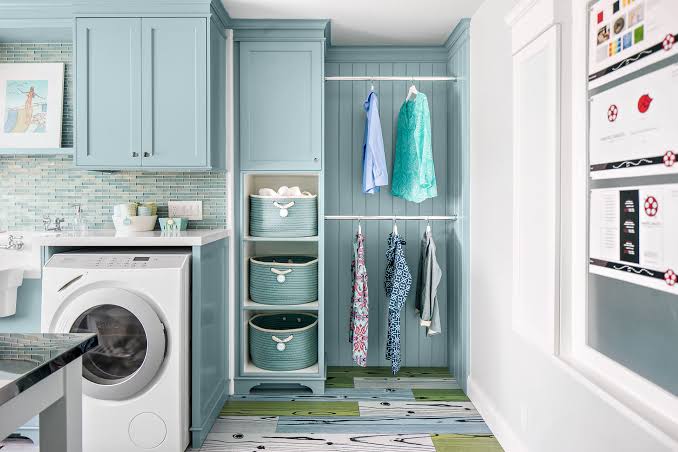
Laundry rooms are easy to overlook during a home renovation.
Kitchens and bathrooms usually get most of the attention, while the laundry room remains a collection of detergent bottles, baskets, cleaning supplies, and appliances squeezed into whatever space is available.
But because laundry is part of everyday life, even a relatively small renovation can make this room noticeably easier to use.
You do not necessarily need new appliances or a complete remodel. Better storage, improved lighting, a more practical work surface, and a smarter layout can transform an ordinary laundry area into one of the most functional spaces in the home.
Here is how to plan a practical laundry room renovation step by step.
Start by Looking at What Is Not Working
Before buying cabinets or choosing paint colors, spend a few days paying attention to how you currently use the space.
Where do dirty clothes collect?
Where do you fold clean laundry?
Do detergent bottles end up on top of the washing machine?
Is there anywhere to hang clothes that should not go in the dryer?
Are cleaning products taking up valuable floor space?
Your renovation should solve real problems rather than simply make the room look different.
Write down the biggest frustrations first. These might include:
- Not enough storage
- No folding surface
- Poor lighting
- Clutter around the washer and dryer
- Nowhere to hang clothes
- Difficult-to-clean flooring
- Poor use of vertical space
- No place for laundry baskets
Once you identify the problems, planning becomes much easier.
Measure the Washer and Dryer Carefully
Appliances determine most of the laundry room layout, so measure them before designing anything around them.
Record the width, height, and depth of both machines.
Remember that the actual space required may be larger than the appliance dimensions because hoses, vents, doors, and manufacturer-recommended clearances also need room.
For front-loading machines, make sure there is enough space for the doors to open comfortably.
For top-loading washers, avoid installing a countertop or cabinet so low that the lid cannot open fully.
If you expect to replace your appliances in the future, avoid building storage so tightly around the current machines that a slightly different model will no longer fit.
A little flexibility can save considerable work later.
Use the Wall Above the Appliances
In many laundry rooms, some of the most valuable storage space is directly above the washer and dryer.
Wall-mounted cabinets can keep detergent, stain removers, cleaning products, extra towels, and household supplies organized without using floor space.
Open shelving is another option.
Shelves are usually easier and less expensive to install than full cabinets, while still providing plenty of practical storage.
Use baskets or containers to organize smaller items so the shelves do not become visually cluttered.
Frequently used products should remain easy to reach. Less frequently used supplies can go on higher shelves.
Add a Folding Counter
A dedicated folding surface can make a surprisingly big difference.
If you have front-loading appliances positioned next to each other, a countertop may be installed above them where appropriate.
This creates an immediate work surface without requiring additional floor space.
Another option is a separate counter with storage underneath.
When choosing countertop material, remember that a laundry room is a working space.
The surface should be:
- Easy to wipe clean
- Resistant to everyday moisture
- Durable enough for baskets and supplies
- Smooth enough for folding clothes
You do not necessarily need an expensive material. A simple, properly finished work surface can perform perfectly well.
Create a Place to Hang Clothes
Not everything belongs in the dryer.
A hanging rail can provide space for shirts, delicate clothing, or garments that need to air dry.
If space is limited, consider a wall-mounted retractable drying rack or fold-down drying system.
Even a short hanging rod installed beneath a shelf can be useful.
Before installing one, think about how long the clothes will hang there and whether they will block access to appliances, doors, or storage.
Good laundry room design is about keeping the workflow clear.
Make Room for Laundry Baskets
Baskets often become one of the biggest sources of laundry room clutter.
Instead of treating them as an afterthought, include them in the design.
You might create open storage beneath a countertop where several baskets can slide in and out.
Another option is a tall shelving unit with dedicated spaces for separate loads.
Depending on your household, you could organize baskets for:
- Whites
- Colors
- Towels
- Delicates
- Individual family members
The exact system matters less than giving the baskets a permanent home.
When everything has a place, the room is much easier to keep organized.
Choose Flooring That Can Handle the Space
Laundry rooms experience moisture, spills, dirt, and regular foot traffic.
The flooring should therefore be practical as well as attractive.
Depending on your home and installation requirements, common options may include tile, luxury vinyl, or other moisture-resistant flooring products.
Whatever material you choose, think about:
- Moisture resistance
- Ease of cleaning
- Durability
- Installation requirements
- Compatibility with the existing subfloor
If the room already has suitable flooring in good condition, replacing it may not be necessary.
Sometimes cleaning, repairing trim, and refreshing the walls can make the existing floor look significantly better.
Improve the Lighting
Laundry rooms are often located in small rooms, hallways, basements, or areas with limited natural light.
That makes lighting particularly important.
Good lighting helps with everyday tasks such as identifying stains, sorting clothes, reading care labels, and cleaning the room.
A bright ceiling fixture may be enough for a small laundry room.
Larger spaces may benefit from additional task lighting near countertops or cabinets.
If electrical changes are required, use a qualified professional where appropriate and follow local code requirements.
Choose a Light, Practical Wall Finish
A laundry room is usually a good place for simple, bright finishes.
Light wall colors can help smaller spaces feel cleaner and more open, particularly when there are few or no windows.
That does not mean everything has to be white.
Soft neutral tones, muted greens, warm grays, and other understated colors can work well without making the space feel busy.
Choose a paint finish suitable for an area that may experience occasional moisture and frequent cleaning.
You can also add personality through smaller details such as cabinet hardware, baskets, wall hooks, or a backsplash rather than using finishes that may be difficult to change later.
Add a Utility Sink If the Layout Allows
For larger laundry rooms, a utility sink can be extremely useful.
It can provide a place for hand-washing clothes, soaking stained items, cleaning household tools, or handling jobs you would rather keep out of the kitchen sink.
However, adding a new sink can involve plumbing work and may significantly increase the scope of a renovation.
If plumbing connections are not already nearby, compare the added convenience with the installation cost before deciding.
This is also an area where professional plumbing work may be appropriate.
Do Not Block Important Appliance Connections
A beautiful renovation is not successful if it makes appliance maintenance difficult.
Washer hoses, dryer vents, water shutoff valves, outlets, drains, and other connections should remain accessible.
Avoid permanently covering important service areas with cabinetry or fixed panels.
You should be able to move appliances when necessary and reach shutoff points quickly.
Dryer ventilation also needs particular attention. Keep venting properly installed and maintained according to appliance requirements and applicable building rules.
Accessibility may not be the most exciting part of the design, but it becomes extremely important when something needs maintenance.
Use Hooks for Small Everyday Items
Not every storage problem requires a cabinet.
Simple wall hooks can hold reusable shopping bags, cleaning brushes, ironing accessories, small laundry bags, or other lightweight items.
A row of hooks behind a door or on an unused wall can turn otherwise wasted space into useful storage.
Wall-mounted organizers can serve a similar purpose.
The goal is to keep the floor and countertops as clear as possible.
Think About the Order of Your Laundry Routine
A good laundry room should follow the way laundry naturally moves through the space.
Ideally, you should be able to:
- Bring dirty laundry into the room.
- Sort it easily.
- Load the washer.
- Move clothing to the dryer or drying area.
- Fold or hang clean items.
- Carry finished laundry back out.
Try to avoid layouts where baskets constantly need to be moved from one side of the room to another.
Even in a very small laundry room, arranging storage around this sequence can improve everyday use.
Small Laundry Room? Focus on Vertical Space
A narrow laundry closet or small utility room can still be highly functional.
When floor space is limited, build upward.
Consider:
- Tall cabinets
- Floating shelves
- Over-appliance storage
- Wall hooks
- Slim organizers
- Fold-down drying racks
- Wall-mounted ironing solutions
Every item that can be stored vertically leaves more room for movement.
Just make sure shelves and cabinets remain practical to reach.
Storage that requires a ladder every time you wash clothes is probably better suited to supplies you rarely use.
Keep the Renovation Simple
A useful laundry room does not need to look like a luxury showroom.
For many homes, the most effective renovation may involve only a few changes:
Add two shelves.
Install a hanging rail.
Create a folding surface.
Improve the lighting.
Give laundry baskets a permanent location.
Paint the walls.
Those relatively straightforward upgrades can change the entire experience of using the room.
Build the Laundry Room Around Everyday Life
The best home renovations are not always the most dramatic ones.
Sometimes they simply remove small frustrations from tasks you repeat every week.
A well-designed laundry room should make it easier to sort, wash, dry, fold, store, and move through the space without unnecessary clutter.
Start with the problems you actually have, use the available space efficiently, and invest in improvements that make everyday routines easier.
When function comes first, even a small laundry room can become one of the hardest-working spaces in your home.